Screen Time and Emotional Regulation in Children
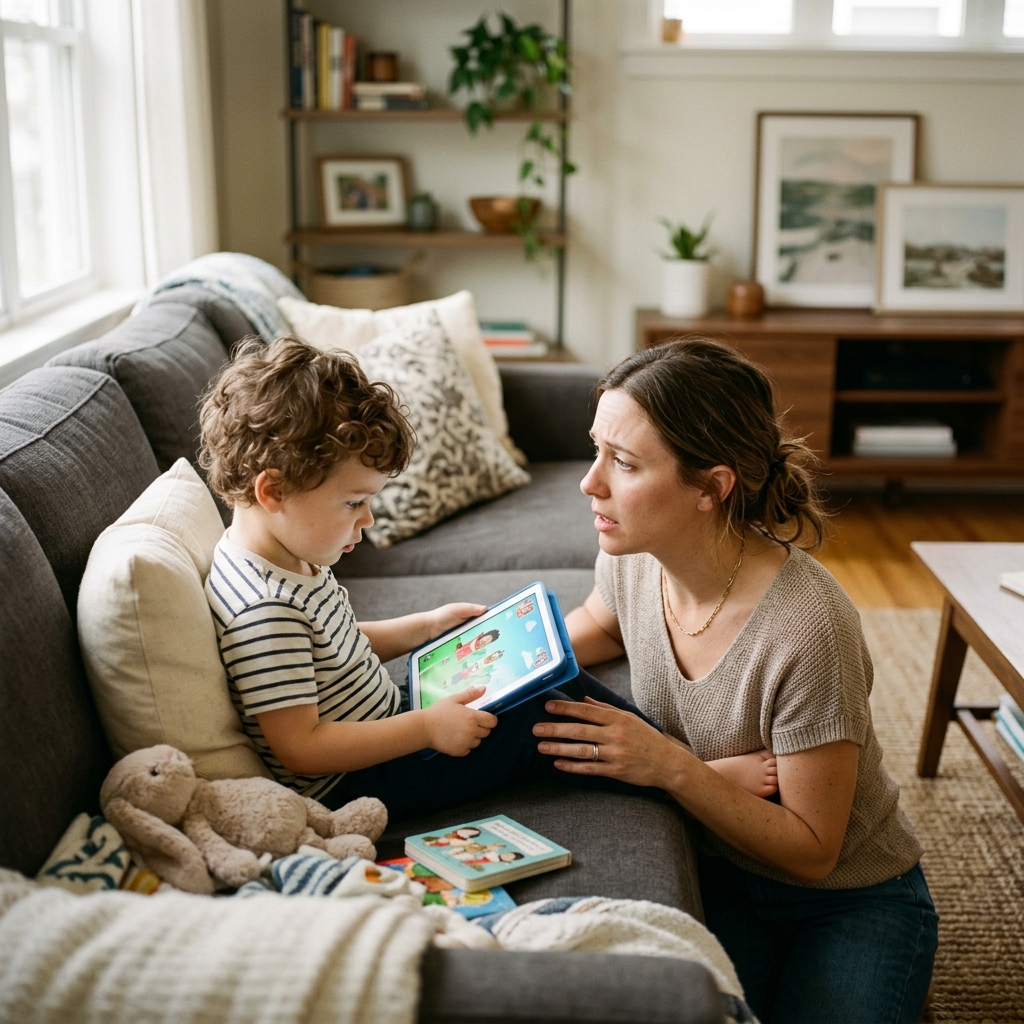
Screen time is one of the most common sources of conflict in modern family life. Many parents notice that their child becomes angry when a device is taken away, asks for screens constantly, or struggles to calm down after fast-paced videos or games. The question is not only "How many minutes?" but also "What happens before, during, and after screen use?"
Why Transitions Are Hard
Digital content is designed to hold attention. When a child stops suddenly, the brain has to shift from high stimulation to ordinary life. This transition can feel uncomfortable, especially for children who already struggle with flexibility, attention, or emotional regulation.
Look at the Pattern
Parents can observe when screen conflict is most intense:
- Before school or bedtime
- After long periods of unstructured viewing
- When the child is hungry, tired, or overstimulated
- After competitive games or very fast videos
Create Clear Screen Routines
Children do better when rules are predictable. Decide when screens are available, what type of content is allowed, where devices are used, and what happens when time ends. Avoid negotiating a new rule every day; consistency reduces conflict over time.
Use Transition Supports
Give a time warning, use a timer, name the next activity, and stay calm when the child protests. Some children need a bridge activity after screens, such as a snack, movement, drawing, or helping with a small task.
Teach Regulation Skills
The goal is not only to remove screens, but to help the child handle frustration. Parents can model calm breathing, name feelings, offer choices, and praise recovery: "You were upset when screen time ended, and you calmed your body. That was hard work."
Conclusion
Healthy screen routines are built through clear boundaries and emotional coaching. When parents understand the regulation challenge behind screen conflict, they can respond with structure instead of daily battles.

Akın Öznazik
Child psychology specialist. Experienced in ADHD, autism spectrum disorders, and behavioral issues. Works with families to support children's healthy development.
More Information